

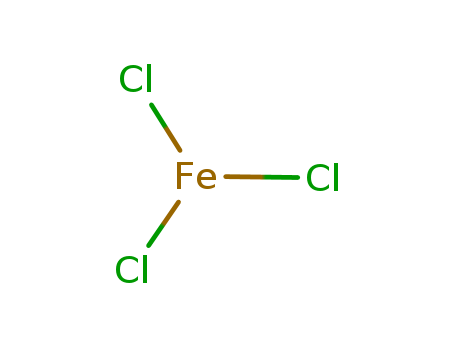
7705-08-0
- Product Name:Iron(III)chloride
- Molecular Formula:FeCl3
- Purity:99%
- Molecular Weight:162.206
Product Details
pd_meltingpoint:306 °C
Appearance:green-black by reflected light
Purity:99%
Cost-effective customized wholesale Iron(III)chloride 7705-08-0
- Molecular Formula:FeCl3
- Molecular Weight:162.206
- Appearance/Colour:green-black by reflected light
- Vapor Pressure:1 mm Hg ( 194 °C)
- Melting Point:306 °C
- Refractive Index:n20/D1.414
- Boiling Point:315 °C
- Flash Point:316oC
- PSA:0.00000
- Density:2.898 g/cm3
- LogP:-8.99050
Ferric chloride(Cas 7705-08-0) Usage
|
Production Methods |
Iron(III) chloride forms passing chlorine gas over iron filings at 350°C: 2Fe + 3Cl2 → 2FeCl3 It also forms heating iron(III) oxide with HCl at elevated temperatures: Fe2O3 + 6HCl → 2FeCl3 + 3H2O The product may be sublimed in a stream of chlorine to give high purity grade iron(III) chloride. The anhydrous chloride also may be made by heating the hexahydrate, FeCl3?6H2O, with thionyl chloride: FeCl3?6H2O + 6SOCl2 → FeCl3 + 12HCl + SO2 |
|
Air & Water Reactions |
Very hygroscopic. Slightly water soluble, where a 0.1M solution has a pH of 2.0. |
|
Reactivity Profile |
Alkali metal hydroxides, acids, anhydrous chlorides of iron, tin, and aluminum, pure oxides of iron and aluminum, and metallic potassium are some of the catalysts that may cause ethylene oxide to rearrange and polymerize, liberating heat, [J. Soc. Chem. Ind. 68:179(1949)]. Explosions occur , although infrequently, from the combination of ethylene oxide and alcohols or mercaptans, [Chem. Eng. News 20:1318(1942)]. Allyl chloride may polymerize violently under conditions involving an acid catalyst, such as sulfuric acid, Ferric chloride, aluminum chloride, Lewis acids, and Ziegler type catalysts (initiators), [Ventrone (1971)]. |
|
Hazard |
Toxic by ingestion, strong irritant to skin and tissue. |
|
Health Hazard |
Inhalation of dust may irritate nose and throat. Ingestion causes irritation of mouth and stomach. Dust irritates eyes. Prolonged contact with skin causes irritation and burns. |
|
Flammability and Explosibility |
Nonflammable |
|
Safety Profile |
Poison by ingestion and intravenous routes. Experimental reproductive effects. Corrosive. Probably an eye, skin, and mucous membrane irritant. Mutation data reported. Reacts with water to produce toxic and corrosive fumes. Catalyzes potentially explosive polymerization of ethylene oxide, chlorine + monomers (e.g., styrene). Forms shock sensitive explosive mixtures with some metals (e.g., potassium, sodium). Violent reaction with all$ chloride. When heated to decomposition it emits highly toxic fumes of HCl. |
|
Potential Exposure |
Iron chloride is used to treat sewage and industrial waste. It is also used as an etchant for photo engraving and rotogravure; in textiles; photography; as a disinfectant; as a feed additive. |
|
Shipping |
UN1773 Ferric chloride, anhydrous, Hazard class: 8; Labels: 8-Corrosive material. UN2582 Ferric chlo ride, solution, Hazard class: 8; Labels: 8-Corrosive material |
|
Purification Methods |
Sublime it at 200o in an atmosphere of chlorine. It is an “iron-black” coloured powder with green irridescence. Store it in a weighing bottle inside a desiccator as it absorbs moisture from air to form the yellow hexahydrate (see next entry). [Tarr Inorg Synth III 191 1950, Pray Inorg Synth V 153 1957, Epperson Inorg Synth VII 163 1963.] |
|
Structure and conformation |
The crystalline solid has a semicovalent layer structure with hexagonal packing of chloride ions, each iron atom being surrounded octahedrally by six chlorines in a BiI3 type structure. The dimers in the vapour phase have a structure similar to that of Al2Cl6 with the iron atoms surrounded by chlorines in a roughly tetrahedral fashion. The magnetic properties of iron(III) chloride in its different environments have been investigated extensively. The magnetic moment at 290°K is 5-73 B.M. and is independent of the field strength. In aqueous hydrochloric acid the room temperature moment is 5-94 B.M. and the hexahydrate has a similar moment (5-95 B.M.). |
|
Incompatibilities |
Aqueous solutions are a strong acid. Violent reaction with bases, allyl chloride; sulfuric acid; water. Shock- and friction-sensitive explosive material forms with potassium, sodium and other active metals. Attacks metals when wet. |
|
Waste Disposal |
Neutralize with lime or soda ash and bury in an approved landfill. |
|
Industrial Applications |
Ferric chloride is used in various applications, including: |
|
Role in Coagulation and Water Treatment |
Ferric chloride is used in coagulation processes for water treatment. |
|
Soil Remediation |
Ferric chloride is used in soil washing techniques for the remediation of multi-metal contaminated soil. Studies have shown that soil washing with ferric chloride, either alone or in combination with chelators, enhances the removal of heavy metals from the topsoil. The addition of ferric chloride may increase metal leaching but is considered favorable for soil remediation. |
|
Catalyst in Liquid Catalyzed Fuel Cells (LCFC) |
Ferric chloride (FeCl3) is used as a main catalyst in liquid catalyzed fuel cells (LCFC) for the direct conversion of carbohydrates to electricity. It accelerates the hydrolysis and oxidation of carbohydrates and enhances electron transfer from glucose to the anode. The addition of FeCl3 reduces the usage of polyoxometalates, making LCFC operation less toxic and more economical. |
|
Physical properties |
Ferric chloride, solution appears as a colorless to light brown aqueous solution that has a faint hydrochloric acid odor. Highly corrosive to most metals and probably corrosive to tissue. Noncombustible. Used in sewage treatment and water purification.Ferric chloride is an dark brown hexagonal crystals; hygroscopic; density 2.898g/cm3; melts at 306°C; decomposes at 315°C; highly soluble in water (74.4g/100g water at 0°C); very soluble in alcohol, ether and acetone. The hexahydrate is brownish-yellow crystalline mass; deliquesces; melts at 37°C; vaporizes around 280°C; highly soluble in water (92g/100g water at 20°C); very soluble in organic solvents such as ethanol, ether and acetone. |
|
Application |
The following list represents some of the most common and largest applications of Ferric Chloride:As a purifying agent in water supply and as a coagulant in municipal and industrial wastewater treatment. In this application, Ferric chloride’s rapid hydrolysis in water makes it an ideal flocculating and precipitating agent. The ferric hydroxide (Fe[OH]3) produced forms flocs (small clumps or tufts) that adsorb suspended particles of various materials (e.g., colloids, clays and bacteria). The clumps, with the adsorbed matter, are then allowed to settle for easy removal. Ferric chloride forms precipitates with hydrogen sulfide (H2S), phosphate (PO4), arsenic as arsenate (AsO4) and hydroxide alkalinity (OH).As an oxidant in indigo blue dyestuff production.As an etching medium in producing printed circuit boards (PCBs).As a catalyst for the reaction of ethylene with chlorine, forming ethylene dichloride (1,2-dichloroethane), an important commodity chemical, which is mainly used for the industrial production of vinyl chloride, the monomer for making PVC.www.marchpump.com |
|
General Description |
Ferric chloride is an orange to brown-black solid. Ferric chloride is slightly soluble in water. Ferric chloride is noncombustible. When wet Ferric chloride is corrosive to aluminum and most metals. Pick up and remove spilled solid before adding water. Ferric chloride is used to treat sewage, industrial waste, to purify water, as an etching agent for engraving circuit boards, and in the manufacture of other chemicals. |
|
Industrial uses |
Ferric chloride (FeCl3) is obtained by an iron chlorination method at a temperature of 600–700 °C. Very limited data are available on the use of ferric chloride in the mineral processing industry. Ferric chloride has a depressing effect on barite and can be used in barite–celestite separation. It was also evaluated as a depressant during niobium– zirconium separation. In general, ferric and ferrous compounds are not selective depressants and in many cases are detrimental for flotation of oxidic and industrial minerals as in the case of anionic flotation, fatty acid, iron complexes or oleate iron complexes. |
InChI:InChI=1/3ClH.Fe/h3*1H;/q;;;+3/p-3
7705-08-0 Relevant articles
The electronic structures of an isostructural series of octahedral nitrosyliron complexes {Fe-NO}6,7,8 elucidated by Mossbauer spectroscopy
Hauser, Christina,Glaser, Thorsten,Bill, Eckhard,Weyhermueller, Thomas,Wieghardt, Karl
, p. 4352 - 4365 (2000)
From the reaction of cis-[(cyclam)Fe(III...
Reaction of a mixture of bismuth and iron oxides with chlorine and sulfur dioxide
Derlyukova,Vinokurova
, p. 1836 - 1842 (2008)
The processes in a heterogenous multicom...
Density functional theory assessment of the thermal degradation of diclofenac and its calcium and iron complexes
Kenawi, Ihsan M.
, p. 61 - 70 (2005)
Thermogravimetric analyses of diclofenac...
Reactions of wüstite and hematite with different chlorinating agents
Kanari,Allain,Gaballah
, p. 79 - 86 (1999)
Chlorination of wüstite (Fe(1-x)O) and h...
Kinetics of the chlorination of hematite
Gennari,Pasquevich
, p. 325 - 339 (1996)
The chlorination of hematite was studied...
Reaction of carotenoids and ferric chloride: Equilibria, isomerization, and products
Gao, Yunlong,Kispert, Lowell D.
, p. 5333 - 5338 (2003)
In the oxidation of carotenoids, ethyl a...
Kinetics of hematite chlorination with Cl2 and Cl2 + O2: Part I. Chlorination with Cl2
Kanari,Mishra,Filippov,Diot,Mochón,Allain
, p. 52 - 59 (2010)
Preliminary tests of the chlorination of...
Effect of SO2 on chlorination of Bi2O3 + Fe2O3 mixtures
Derlyukova,Vinokurova,Anufrieva
, p. 1371 - 1375 (2008)
The reaction of Bi2O3 + Fe2O3 mixtures w...
Oxidation of Fe(III) to Fe(VI) by the Fe(CN) 63- ion in strong solution of alkalis
Shilov,Gogolev
, p. 1773 - 1777 (2010/02/16)
Ferricyanide ions oxidize Fe(III) up to ...
An overview study of chlorination reactions applied to the primary extraction and recycling of metals and to the synthesis of new reagents
Kanari,Allain,Joussemet,Mochón,Ruiz-Bustinza,Gaballah
, p. 42 - 50 (2010/01/06)
Energy intensive classical metallurgical...
7705-08-0 Process route
-

-
56-23-5
tetrachloromethane

-
-
765207-04-3
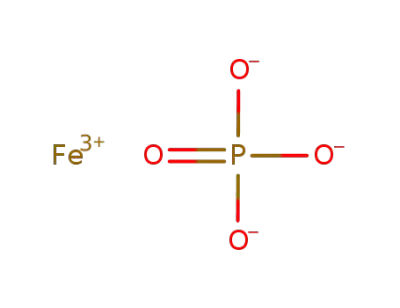
iron(III) phosphate

-
-
10026-13-8,874483-75-7
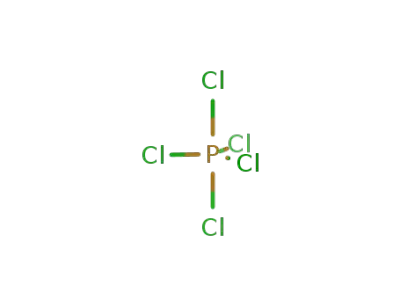
phosphorus pentachloride
-
-
7705-08-0
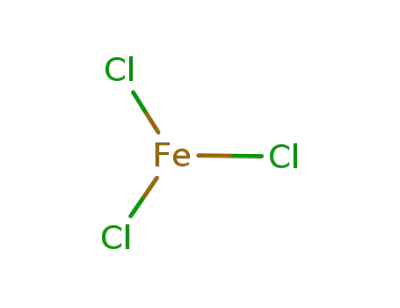
iron(III) chloride
| Conditions | Yield |
|---|---|
|
In
neat (no solvent);
passing CCl4 over FePO4 below red heat;;
|
|
|
In
neat (no solvent);
react. of CCl4 vapor with FePO4 below the decompn. temp. of CCl4;; removal of FeCl3 with a layer of KCl heated at 200 °C;;
|
|
|
In
neat (no solvent);
react. of CCl4 vapor with FePO4 below the decompn. temp. of CCl4;; removal of FeCl3 with a layer of KCl heated at 200 °C;;
|
-
-
765207-04-3
iron(III) phosphate
-

-
7782-50-5
chlorine
-
-
7705-08-0
iron(III) chloride
-
-
10025-87-3,12599-09-6,63736-95-8,39380-77-3
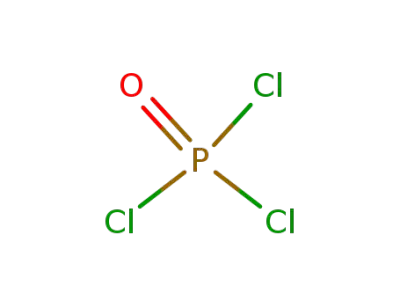
trichlorophosphate
| Conditions | Yield |
|---|---|
|
In
neat (no solvent);
FePO4 is mixed with coke and binding agent and then pressed as briquette, subsequent chlorination at at 600 to 650°C;; separation from FeCl3 via fractionate condensation;;
|
|
|
In
neat (no solvent);
FePO4 is mixed with coke and binding agent and then pressed as briquette, subsequent chlorination at at 600 to 650°C;; separation from FeCl3 via fractionate condensation;;
|
7705-08-0 Upstream products
-
75-44-5
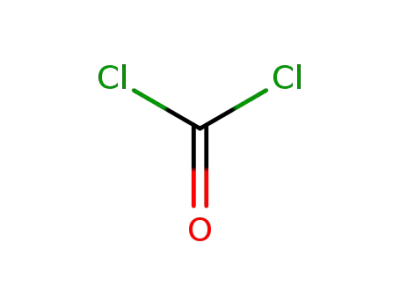
phosgene
-
7446-70-0
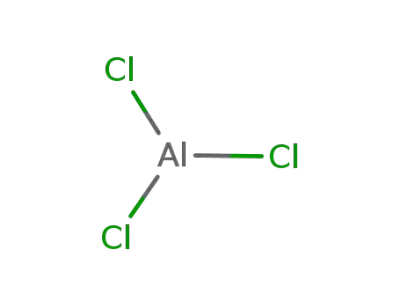
aluminium trichloride
-
64-17-5

ethanol
-
7732-18-5

water
7705-08-0 Downstream products
-
626-61-9

4-Chloropyridine
-
2233-29-6

2,3,4-lutidine
-
56-23-5
tetrachloromethane
-
124-04-9
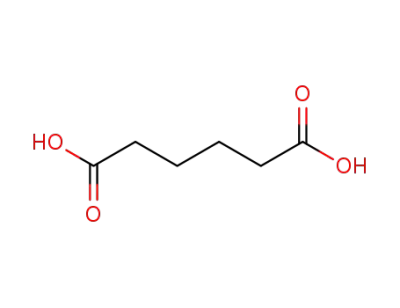
Adipic acid
Relevant Products
-
-
 Tris(4-bromophenyl)amine
CAS:4316-58-9
-
 Sodium triacetoxyborohydride
CAS:56553-60-7
