

191-24-2
- Product Name:1,12-Benzoperylene
- Molecular Formula:C22H12
- Purity:99%
- Molecular Weight:276.337
Product Details
pd_meltingpoint:277-279 °C(lit.)
Appearance:Colorless to white crystalline solid
Purity:99%
Good factory supply good 1,12-Benzoperylene 191-24-2
- Molecular Formula:C22H12
- Molecular Weight:276.337
- Appearance/Colour:Colorless to white crystalline solid
- Vapor Pressure:1.12E-09mmHg at 25°C
- Melting Point:277-279 °C(lit.)
- Refractive Index:2.009
- Boiling Point:500.998 °C at 760 mmHg
- PKA:>15 (Christensen et al., 1975)
- Flash Point:247.24 °C
- PSA:0.00000
- Density:1.379 g/cm3
- LogP:6.32820
1,12-BENZOPERYLENE(Cas 191-24-2) Usage
|
Air & Water Reactions |
Insoluble in water. |
|
Reactivity Profile |
Vigorous reactions, sometimes amounting to explosions, can result from the contact between aromatic hydrocarbons, such as 1,12-BENZOPERYLENE, and strong oxidizing agents. They can react exothermically with bases and with diazo compounds. Substitution at the benzene nucleus occurs by halogenation (acid catalyst), nitration, sulfonation, and the Friedel-Crafts reaction. |
|
Health Hazard |
Inhalation of material may be harmful. Contact may cause burns to skin and eyes. Inhalation of Asbestos dust may have a damaging effect on the lungs. Fire may produce irritating, corrosive and/or toxic gases. Some liquids produce vapors that may cause dizziness or suffocation. Runoff from fire control may cause pollution. |
|
Fire Hazard |
Some may burn but none ignite readily. Containers may explode when heated. Some may be transported hot. |
|
Safety Profile |
Questionable carcinogen.Mutation data reported. When heated to decomposition itemits acrid smoke and irritating fumes. |
|
Carcinogenicity |
Subcutaneous or dermal administration (repeated administration and initiation–promotion protocols) of benzo[ghi]perylene to mice gave negative results. Intrapulmonary injection into rats gave results considered to be inadequate for evaluation. |
|
Source |
Drinking water standard: No MCLGs or MCLs have been proposed (U.S. EPA, 2000). Detected in 7 of 8 diesel fuels at concentrations ranging from 0.008 to 0.35 mg/L with a mean value of 0.113 mg/L (Westerholm and Li, 1994). Identified in Kuwait and South Louisiana crude oils at concentrations of <1 and 1.6 ppm, respectively (Pancirov and Brown, 1975) and in fresh motor oil (120 μg/kg) and used motor oil (108.8–289.4 mg/kg) (quoted, Verschueren, 1983). Detected in asphalt fumes at an average concentration of 22.76 ng/m3 (Wang et al., 2001). The concentration of benzo[ghi]perylene in coal tar and the maximum concentration reported in groundwater at a mid-Atlantic coal tar site were 1,200 and 0.002 mg/L, respectively (Mackay and Gschwend, 2001). Based on laboratory analysis of 7 coal tar samples, benzo[ghi]perylene concentrations ranged from ND to 1,900 ppm (EPRI, 1990). Benzo[ghi]perylene was reported in a high-temperature coal tar pitch used in roofing at concentrations ranging from 754 to 3,980 mg/kg (Malaiyandi et al., 1982). Nine commercially available creosote samples contained benzo[ghi]perylene at concentrations ranging from 1 to 45 mg/kg (Kohler et al., 2000). Schauer et al. (2001) measured organic compound emission rates for volatile organic compounds, gas-phase semi-volatile organic compounds, and particle-phase organic compounds from the residential (fireplace) combustion of pine, oak, and eucalyptus. The particle-phase emission rates of benzo[ghi]perylene were 0.437 mg/kg of pine burned and 0.173 mg/kg of eucalyptus burned. Gas-phase tailpipe emission rates from gasoline-powered automobiles with and without catalytic converters were 0.26 and 10.7 μg/km, respectively (Schauer et al., 2002). |
|
Environmental fate |
Biological. Based on aerobic soil die away test data at 10 to 30 °C, the estimated half-lives ranged from 590 to 650 d (Coover and Sims, 1987). Groundwater. Based on aerobic soil die away test data at 10 to 30 °C, the estimated half-lives ranged from 3.23 to 3.56 yr (Coover and Sims, 1987). Photolytic. The atmospheric half-life was estimated to range from 0.321 to 3.21 h (Atkinson, 1987). Behymer and Hites (1985) determined the effect of different substrates on the rate of photooxidation of benzo[ghi]perylene using a rotary photoreactor. The photolytic half-lives of benzo[ghi]perylene using silica gel, alumina, and fly ash were 7.0, 22, and 29 h, respectively. Chemical/Physical. At influent concentrations of 1.0, 0.1, 0.01, and 0.001 mg/L, the GAC adsorption capacities were 10.7, 4.6, 2.0, and 0.85 mg/g, respectively (Dobbs and Cohen, 1980). |
|
Purification Methods |
It forms light green crystals on recrystallisation from *C6H6 or xylene and sublimes at 320-340o/0.05mm [UV: Hopff & Schweizer Helv Chim Acta 42 2315 1959, Clar Chem Ber 65 846 1932, Fluoresc. Spectrum: Bowen & Brocklehurst J Chem Soc 3875 1954]. It also recrystallises from propan-1-ol [Altman & Ginsburg J Chem Soc 466 1959]. The 1,3,5-Trinitrobenzene complex has m 310-313o (deep red crystals from *C6H6), the picrate has m 267-270o (dark red crystals from *C6H6), and the styphnate (2,4,6-trinitroresorcinol complex) has m 234o (wine red crystals from *C6H6). [Beilstein 5 IV 2766.] |
|
General Description |
Colorless to white crystalline solid. Water insoluble. |
InChI:InChI=1/C22H12/c1-3-13-7-9-15-11-12-16-10-8-14-4-2-6-18-17(5-1)19(13)21(15)22(16)20(14)18/h1-12H
191-24-2 Relevant articles
REDUCTIVE RING CLOSURE OF HELICENES
Ayalon, Ari,Rabinovitz, Mordecai
, p. 2395 - 2398 (1992)
Reduction of -helicene (1) by alkali met...
Probing Diels-Alder reactivity on a model CNT sidewall
Jackson, Evan P.,Sisto, Thomas J.,Darzi, Evan R.,Jasti, Ramesh
, p. 3754 - 3758 (2016)
We have synthesized a cycloparaphenylene...
ORGANIC COMPOUND, THREE-DIMENSIONAL ORGANIC FRAMEWORK FORMED BY USING ORGANIC COMPOUND, SEPARATION SIEVE AND OPTICAL LAYER, WHICH COMPRISE ORGANIC FRAMEWORK, AND OPTICAL DEVICE COMPRISING OPTICAL LAYER AS OPTICAL AMPLIFICATION LAYER
-
Paragraph 0356; 0359; 0360, (2019/02/13)
An organic compound, a three-dimensional...
Organic compound and 3-dimensional organic framework formed using the same
-
Paragraph 0321; 0325; 0326, (2018/07/07)
Provided is a three-dimensional organic ...
Facile photochemical synthesis of 5,10-disubstituted [5]helicenes by removing molecular orbital degeneracy
Ito, Natsuki,Hirose, Takashi,Matsuda, Kenji
supporting information, p. 2502 - 2505 (2014/05/20)
Photocyclodehydrogenation is a key react...
191-24-2 Process route
-
Minuteman missile propellant
-
Minuteman missile propellant

-

-
129-00-0
pyrene

-
![benzo[e]acephenanthrylene](/upload/2026/5/3f35ccd6-aad8-4fd4-87c3-b7c1f65491df.png)
-
205-99-2
benzo[e]acephenanthrylene
-

-
120-12-7
anthracene
-
![Benzo[ghi]perylene](/upload/2026/5/232aab0b-ff32-40e2-9eb7-b3a4371daf04.png)
-
191-24-2
Benzo[ghi]perylene
| Conditions | Yield |
|---|---|
|
With
oxygen;
at 1045.85 - 1146.85 ℃;
Further byproducts given. Title compound not separated from byproducts;
Formation of xenobiotics;
|
-
standard missile deload propellant
-
standard missile deload propellant
-
-
129-00-0
pyrene
-
-
205-99-2
benzo[e]acephenanthrylene
-
-
191-24-2
Benzo[ghi]perylene
-

-
91-57-6,34468-07-0
2-Methylnaphthalene
| Conditions | Yield |
|---|---|
|
With
oxygen;
at 1036.85 - 1162.85 ℃;
Further byproducts given. Title compound not separated from byproducts;
Formation of xenobiotics;
|
191-24-2 Upstream products
-
82817-99-0

tetrahydro<5>helicene
-
6245-10-9

Benzo
perylen-1,2-dicarbonsaeure-anhydrid -
855289-58-6
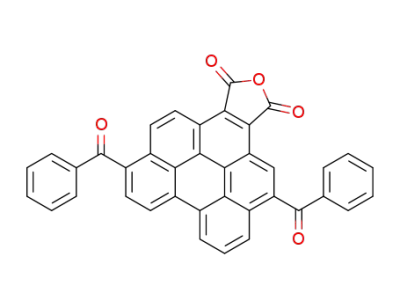
4,10-dibenzoyl-benzo[ghi]perylene-1,2-dicarboxylic acid-anhydride
-
1608-30-6

1,4-distyrylbenzene
191-24-2 Downstream products
-
5869-30-7

1,12;4,5-Dibenzo-perylen
-
5869-33-0

4-(3-Carboxy-propyl)-1,12-benzo-perylen
-
57431-69-3
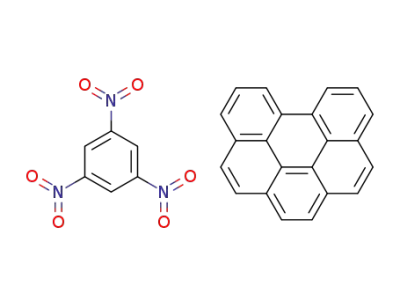
benzo[ghi]perylene; compound with 1,3,5-trinitro-benzene
-
58802-20-3

1,2,7,8-tetrachlorodibenzofuran
Relevant Products
-
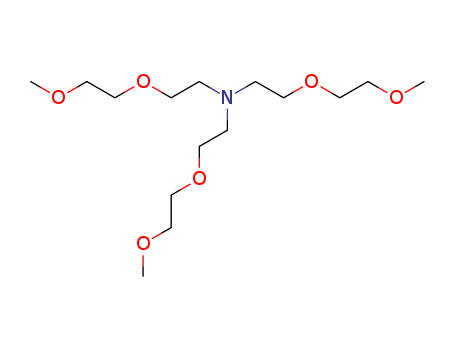 Tris(2-(2-methoxyethoxy)ethyl)amine
CAS:70384-51-9
-
 2-Ethylhexyl bromide
CAS:18908-66-2
-