


Product Details
pd_meltingpoint:111-114 °C(lit.)
Appearance:white crystals
Purity:99%
Purity 99% Min Fluorene 86-73-7 Spot Supply with Safe Transportation
- Molecular Formula:C13H10
- Molecular Weight:166.222
- Appearance/Colour:white crystals
- Vapor Pressure:0.003mmHg at 25°C
- Melting Point:111-114 °C(lit.)
- Refractive Index:1.645
- Boiling Point:293.568 °C at 760 mmHg
- PKA:>15 (Christensen et al., 1975)
- Flash Point:133.064 °C
- PSA:0.00000
- Density:1.12 g/cm3
- LogP:3.25780
Fluorene(Cas 86-73-7) Usage
|
Chemical Description |
Fluorene is a polycyclic aromatic hydrocarbon with the chemical formula C13H10. |
|
Physical properties |
Small white leaflets or crystalline flakes from ethanol. Fluorescent when impure. |
|
Definition |
ChEBI: An ortho-fused tricyclic hydrocarbon that is a major component of fossil fuels and their derivatives |
|
Synthesis Reference(s) |
Journal of the American Chemical Society, 73, p. 2656, 1951 DOI: 10.1021/ja01150a069Synthetic Communications, 26, p. 1467, 1996 DOI: 10.1080/00397919608003512The Journal of Organic Chemistry, 37, p. 1273, 1972 DOI: 10.1021/jo00973a049 |
|
General Description |
White leaflets. Sublimes easily under a vacuum. Fluorescent when impure. |
|
Air & Water Reactions |
Insoluble in water. |
|
Reactivity Profile |
Vigorous reactions, sometimes amounting to explosions, can result from the contact between aromatic hydrocarbons, such as Fluorene, and strong oxidizing agents. They can react exothermically with bases and with diazo compounds. Substitution at the benzene nucleus occurs by halogenation (acid catalyst), nitration, sulfonation, and the Friedel-Crafts reaction. |
|
Hazard |
Questionable carcinogen. |
|
Health Hazard |
Acute toxicity in animals is very low. AnLD50 (intraperitoneal) in mice is 2000 mg/kg.Carcinogenicity of Fluorene in animalsis not well established. It tested negative in ahistidine reversion–Ames test. |
|
Potential Exposure |
Fluorene is used in resins, dyes, and is a chemical intermediate. |
|
Source |
Fluorene was detected in groundwater beneath a former coal gasification plant in Seattle, WA at a concentration of 140 μg/L (ASTR, 1995). Present in diesel fuel and corresponding aqueous phase (distilled water) at concentrations of 350 to 900 mg/L and 12 to 26 g/L, respectively (Lee et al., 1992). Schauer et al. (1999) reported fluorene in diesel fuel at a concentration of 52 g/g and in a diesel-powered medium-duty truck exhaust at an emission rate of 34.6 g/km. Diesel fuel obtained from a service station in Schlieren, Switzerland contained fluorene at an estimated concentration of 170 mg/L (Schluep et al., 2001). Based on laboratory analysis of 7 coal tar samples, fluorene concentrations ranged from 1,100 to 12,000 ppm (EPRI, 1990). Lao et al. (1975) reported a fluorene concentration of 27.39 g/kg in a coal tar sample. Detected in 1-yr aged coal tar film and bulk coal tar at an identical concentration of 4,400 mg/kg (Nelson et al., 1996). A high-temperature coal tar contained fluorene at an average concentration of 0.64 wt % (McNeil, 1983). Identified in high-temperature coal tar pitches at concentrations ranging from 800 to 4,000 mg/kg (Arrendale and Rogers, 1981). Lee et al. (1992a) equilibrated 8 coal tars with distilled water at 25 °C. The maximum concentration of fluorene observed in the aqueous phase was 0.3 mg/L. Fluorene was detected in asphalt fumes at an average concentration of 34.95 ng/m3 (Wang et al., 2001). Nine commercially available creosote samples contained fluorene at concentrations ranging from 19,000 to 73,000 mg/kg (Kohler et al., 2000). Thomas and Delfino (1991) equilibrated contaminant-free groundwater collected from Gainesville, FL with individual fractions of three individual petroleum products at 24–25 °C for 24 h. The aqueous phase was analyzed for organic compounds via U.S. EPA approved test method 625. Average fluorene concentrations reported in water-soluble fractions of unleaded gasoline, kerosene, and diesel fuel were 1, 3, and 10 μg/L, respectively. Fluorene was detected in soot generated from underventilated combustion of natural gas doped with toluene (3 mole %) (Tolocka and Miller, 1995). Schauer et al. (2001) measured organic compound emission rates for volatile organic compounds, gas-phase semi-volatile organic compounds, and particle-phase organic compounds from the residential (fireplace) combustion of pine, oak, and eucalyptus. The gas-phase emission rates of fluorene were 4.44 mg/kg of pine burned, 3.83 mg/kg of oak burned, and 2.613 mg/kg of eucalyptus burned. California Phase II reformulated gasoline contained fluorene at a concentration of 4.35 mg/kg. Gas-phase tailpipe emission rates from gasoline-powered automobiles with and without catalytic converters were 9.72 and 358 μg/km, respectively (Schauer et al., 2002). Under atmospheric conditions, a low rank coal (0.5–1 mm particle size) from Spain was burned in a fluidized bed reactor at seven different temperatures (50 °C increments), beginning at 650 °C. The combustion experiment was also conducted at different amounts of excess oxygen (5 to 40%) and different flow rates (700 to 1,100 L/h). At 20% excess oxygen and a flow rate of 860 L/h, the amount of fluorine emitted ranged from 850.7 ng/kg at 950 °C to 3,632.8 ng/kg at 750 °C. The greatest amount of PAHs emitted were observed at 750 °C (Mastral et al., 1999). In one study, fluorene comprised about 7.6% of polyaromatic hydrocarbons in creosote (Grifoll et al., 1995). Identified as an impurity in commcerially available acenaphthene (Marciniak, 2002). Typical concentration of fluorene in a heavy pyrolysis oil is 1.6 wt % (Chevron Phillips, May 2003). |
|
Environmental fate |
Biological. Fluorene was statically incubated in the dark at 25 °C with yeast extract and settled domestic wastewater inoculum. Significant biodegradation with gradual adaptation was observed. At concentrations of 5 and 10 mg/L, biodegradation yields at the end of 4 wk of incubation were 77 and 45%, respectively (Tabak et al., 1981). Photolytic. Fluorene reacts with photochemically produced OH radicals in the atmosphere. The atmospheric half-life was estimated to range from 6.81 to 68.1 h (Atkinson, 1987). Behymer and Hites (1985) determined the effect of different substrates on the rate of photooxidation of fluorene (25 μg/g substrate) using a rotary photoreactor. The photolytic half-lives of fluorene using silica gel, alumina, and fly ash were 110, 62, and 37 h, respectively. Gas-phase reaction rate constants for OH radicals, NO3 radicals, and ozone at 24 °C were 1.6 x 10⁻¹¹, 3.5 x 10⁻¹⁵, and <2 x 10-19 in cm3/molecule?sec, respectively (Kwok et al., 1997). Chemical/Physical. Oxidation by ozone to fluorenone has been reported (Nikolaou, 1984). Chlorination of fluorene in polluted humus poor lake water gave a chlorinated derivative tentatively identified as 2-chlorofluorene (Johnsen et al., 1989). Fluorene was also identified as a chlorination product of fluorene at low pH (<4) (Oyler et al., 1983). It was suggested that the chlorination of fluorene in tap water accounted for the presence of chlorofluorene (Shiraishi et al., 1985). |
|
Shipping |
UN3077 Environmentally hazardous substances, solid, n.o.s., Hazard class: 9; Labels: 9-Miscellaneous haz ardous material, Technical Name Required. |
|
Purification Methods |
Purify fluorene by chromatography of CCl4 or pet ether (b 40-60o) solution on alumina, with *benzene as eluent. Crystallise it from 95% EtOH, 90% acetic acid and again from EtOH. Crystallisation using glacial acetic acid retains an impurity which is removed by partial mercuration and precipitation with LiBr [Brown et al. J Am Chem Soc 84 1229 1962]. It has also been crystallised from hexane, or *benzene/EtOH, distilled under vacuum and purified by zone refining. [Gorman et al. J Am Chem Soc 107 4404 1985, Beilstein 5 IV 2142.] |
|
Incompatibilities |
Incompatible with oxidizers (chlorates, nitrates, peroxides, permanganates, perchlorates, chlorine, bromine, fluorine, etc.); contact may cause fires or explo sions. Keep away from alkaline materials, strong bases, strong acids, oxoacids, epoxides. Compound can react exo thermically with bases and with diazo compounds. Substitution at the benzene nucleus occurs by halogenation (acid catalyst), nitration, sulfonation, and the Friedel Crafts reaction. |
|
Waste Disposal |
Persons in charge of vessels or facilities are required to notify the National Response Center (NRC) immediately when there is a release of this designated hazardous substance, in an amount equal to or greater than its RQ listed above. The toll free number of the NRC is (800) 424-8802; In the Washington D.C. metro politan area call (202) 426-2675. The rule for determining when notification is required is stated in 40 CFR 302.4 (Section IV. D.3.b). |
InChI:InChI=1/C13H10/c1-3-7-12-10(5-1)9-11-6-2-4-8-13(11)12/h1-8H,9H2
86-73-7 Relevant articles
Synthesis and thermal rearrangement of pentacyclo[6.5.0.04,12.05,10.09,13]trideca-2,6-diene
Marchand,Rajapaksa,Vidyasagar,Eckrich,Kumar
, p. 11937 - 11944 (1995)
Pentacyclo[6.5.0.04,12.05,10.09,13]tride...
Carbanion Intermediates in the Photodecarboxylation of Benzannelated Acetic Acids in Aqueous Solution
McAuley, Iain,Krogh, Erik,Wan, Peter
, p. 600 - 602 (1988)
-
Hydrogenation of 9-pyridylmethylene- and 9-benzylidene(aza)fluorenes in the presence of rhenium heptasulfide
Kolyadina,Soldatenkov,Ryashentseva,Prostakov
, p. 171 - 173 (1996)
Hydrogenation of 9-pyridylmethylene(aza)...
Laser-induced carbene-carbene rearrangement in solution: The diphenylcarbene-fluorene rearrangement
Regimbald-Krnel, Michele J.,Wentrup, Curt
, p. 8789 - 8795 (2013)
Diphenylcarbene (DPC) generated by high-...
Surface confined ketyl radicals via samarium(II)-grafted mesoporous silicas [3]
Nagl, Iris,Widenmeyer, Markus,Grasser, Stefan,Koehler, Klaus,Anwander, Reiner
, p. 1544 - 1545 (2000)
-
Fluorescence spectroscopy of aromatic species produced in rich premixed ethylene flames
Ciajolo,Ragucci,Apicella,Barbella,De Joannon,Tregrossi
, p. 835 - 841 (2001)
The fluorescence spectra of the condense...
Palladium-Catalyzed Coupling of Biphenyl-2-yl Trifluoromethanesulfonates with Dibromomethane to Access Fluorenes
Pan, Shulei,Zhang, Yanghui,Zhu, Qiongqiong
, (2022/03/27)
A facile and efficient method has been d...
A facile and versatile electro-reductive system for hydrodefunctionalization under ambient conditions
Huang, Binbin,Guo, Lin,Xia, Wujiong
supporting information, p. 2095 - 2103 (2021/03/26)
A general electrochemical system for red...
Pd-Catalyzed Assembly of Fluoren-9-ones by Merging of C-H Activation and Difluorocarbene Transfer
Liu, Xiaobing,Sheng, Heyun,Zhou, Yao,Song, Qiuling
supporting information, p. 2543 - 2547 (2021/05/05)
We disclose a novel Pd-catalyzed assembl...
Method for reducing carbonyl reduction to methylene under illumination
-
Paragraph 0033-0038, (2021/09/29)
The invention belongs to the technical f...
86-73-7 Process route
-
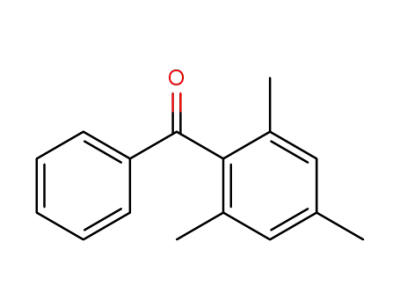
-
954-16-5
2,4,6-Trimethylbenzophenon

-

-
86-73-7
9H-fluorene

-

-
1430-97-3
2-methyl-9H-fluorene
-

-
120-12-7
anthracene
-

-
1556-99-6
4-methylfluorene
-

-
610-48-0
1-methylanthracene
-

-
2928-44-1
2,4-dimethyl-9H-fluorene
| Conditions | Yield |
|---|---|
|
at 870 ℃;
under 0.5 Torr;
|
11.2 % Chromat. 3.7 % Chromat. 3.9 % Chromat. 1.9 % Chromat. 2 % Chromat. 1 % Chromat. |
-

-
7385-10-6
9-(trimethylsilyl)fluorene
-
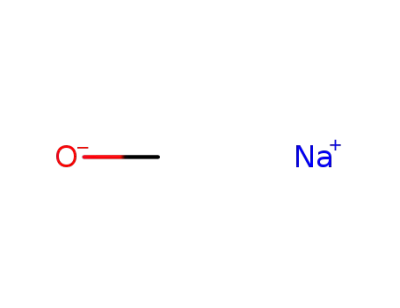
-
124-41-4
sodium methylate
-
-
86-73-7
9H-fluorene
-
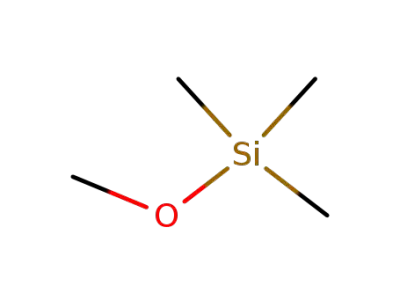
-
1825-61-2
Trimethylmethoxysilane
| Conditions | Yield |
|---|---|
|
In
methanol;
at 50 ℃;
Rate constant;
|
86-73-7 Upstream products
-
693-03-8
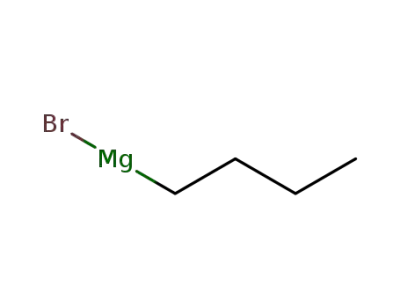
n-butyl magnesium bromide
-
75-44-5
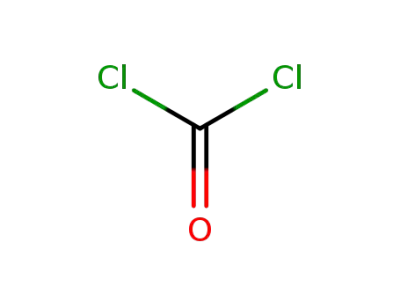
phosgene
-
60-29-7

diethyl ether
-
1133-80-8

2-bromo-9H-fluorene
86-73-7 Downstream products
-
1133-80-8
2-bromo-9H-fluorene
-
843638-98-2
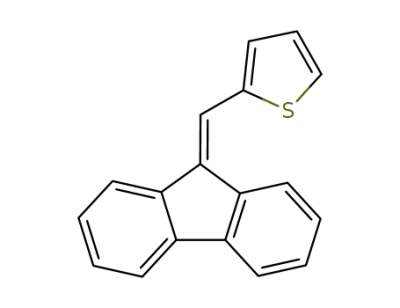
2-((9H-fluorene-9-ylidene)methyl)thiophene
-
93322-14-6
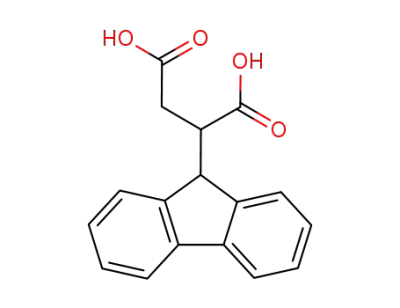
2-(9H-fluoren-9-yl)succinic acid
-
246-02-6

benzo[a]azulene
Relevant Products
-
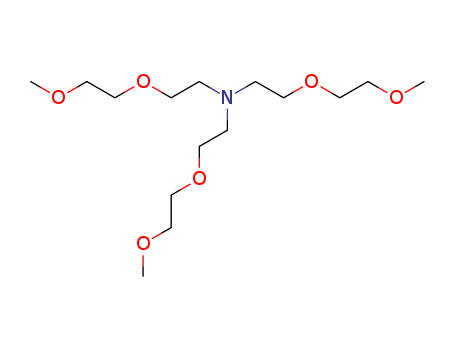 Tris(2-(2-methoxyethoxy)ethyl)amine
CAS:70384-51-9
-
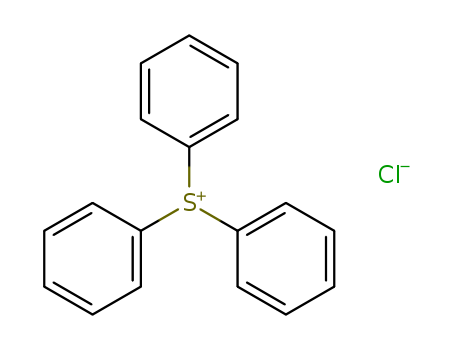 Triphenylsulfonium chloride
CAS:4270-70-6
-
Sulfonium,(4-methylphenyl)diphenyl-, chloride
CAS:326925-57-9
