

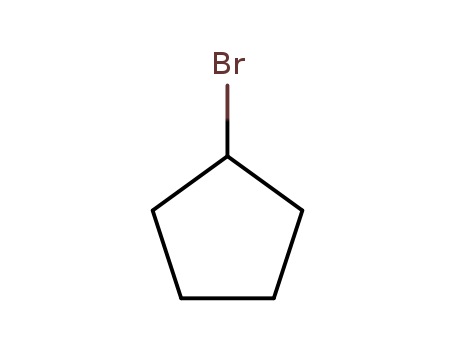
137-43-9
- Product Name:Cyclopentyl bromide
- Molecular Formula:C5H9Br
- Purity:99%
- Molecular Weight:149.03
Product Details
pd_meltingpoint:137-139ºC
Appearance:colorless to yellow liquid
Purity:99%
Buy Good Quality Cyclopentyl bromide 137-43-9 with a minimum purity of 99%
- Molecular Formula:C5H9Br
- Molecular Weight:149.03
- Appearance/Colour:colorless to yellow liquid
- Vapor Pressure:9.73mmHg at 25°C
- Melting Point:137-139ºC
- Refractive Index:1.4885
- Boiling Point:135 °C at 760 mmHg
- Flash Point:35 °C
- PSA:0.00000
- Density:1.445 g/cm3
- LogP:2.32390
Bromocyclopentane(Cas 137-43-9) Usage
|
Preparation |
Bromocyclopentane is synthesized by bromination of cyclopentanol: cyclopentanol is mixed with hydrobromic acid and heated to about 170°C refluxed for 6-8h. Then distilled with water steam, the oil layer is washed with 5% sodium carbonate, then dried, filtered, fractionated and collected 136-139°C fraction is the finished product. Another method is by the reaction of cyclopentanol and phosphorus tribromide: the cyclopentanol is cooled to 0 ℃, add the newly evaporated phosphorus tribromide drop by drop, add it all at 0-5 ℃, stir for 2h, and leave it at room temperature overnight. Add water and stratify, take the oil layer water distillation. Distillate stratification, the oil layer was washed with 10% sodium bicarbonate solution, dried with anhydrous calcium chloride, filtration, filtrate distillation, collect 134-141 ℃ fraction that is bromocyclopentane. |
|
Reactions |
Bromocyclopentane is reacted with magnesium turnings in dry tetrahydrofuran making cyclopentyl Grignard reagent, a main precursor in the synthesis of Ketamine.Bromocyclopentane (22.0 g, 0.15 mol) was added to a soln of NaNO2 (18 g, 0.26 mol) in dry DMSO (100 mL) at 15°C and the mixture was stirred at this temperature for 3 h. The mixture was poured into ice water (250 mL) and extracted with petroleum ether (bp 35-37°C; 4 × 50 mL). The combined organic extracts were washed with H2O (4× 50 mL), dried (MgSO4), and concentrated under reduced pressure. The residue was distilled to give Nitrocyclopentane; yield: 9.9 g (58%); bp 62°C/8 Torr; nD/20 1.4538.Synthesis of Nitrocyclopentane |
|
Synthesis Reference(s) |
The Journal of Organic Chemistry, 54, p. 1463, 1989 DOI: 10.1021/jo00267a047 |
InChI:InChI=1/C5H9Br/c6-5-3-1-2-4-5/h5H,1-4H2
137-43-9 Relevant articles
The Mixed-Chain Alternative to the Postulated ? and ? Reactivities of the Succinimidyl Radical: Cyclopentane/Cyclohexane. A Critical Examination of the Rebuttal of the Previous Report
Tanner, D. D.,Meintzer, C. P.,Tan, S. L.
, p. 1534 - 1538 (1985)
-
Ionic Chlorination (Bromination) of Alkanes and Cycloalkanes with Methylene Chloride (Bromide)/Antimony Pentafluoride
Olah, George A.,Wu, An-hsiang,Farooq, Omar
, p. 1463 - 1465 (1989)
-
A mild method for the replacement of a hydroxyl group by halogen: 2. unified procedure and stereochemical studies
Gati, Wafa,Munyemana, Fran?ois,Colens, Alain,Srour, Aladdin,Dufour, Mathilde,Vardhan Reddy, K. Harsha,Téchy, Brigitte,Rosse, Gérard,Schweiger, Ed,Qiao, Qi,Ghosez, Léon
, (2020/08/19)
N,N-Dimethyl- and N,N-diisopropyl-1-halo...
Highly selective halogenation of unactivated C(sp3)-H with NaX under co-catalysis of visible light and Ag@AgX
Liu, Shouxin,Zhang, Qi,Tian, Xia,Fan, Shiming,Huang, Jing,Whiting, Andrew
, p. 4729 - 4737 (2018/10/23)
The direct selective halogenation of una...
Preparation method of alkane brominated material
-
Paragraph 0043-0044, (2018/09/08)
The invention relates to a preparation m...
Catalytic Bromination of Alkyl sp3C-H Bonds with KBr/Air under Visible Light
Zhao, Mengdi,Lu, Wenjun
supporting information, p. 5264 - 5267 (2018/09/12)
Alkyl sp3C-H bonds of cycloalkanes and f...
137-43-9 Process route
-

-
287-92-3
Cyclopentane

-
-
123-56-8,89963-74-6
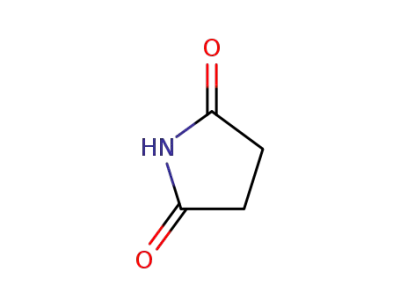
Succinimide

-

-
137-43-9
Cyclopentyl bromide
-

-
3234-49-9
1,2-dibromopentane
-

-
18926-24-4
3-bromopropanoyl isocyanate
| Conditions | Yield |
|---|---|
|
With
N-Bromosuccinimide; cyclohexane;
In
acetonitrile;
at 23 ℃;
for 16h;
Product distribution;
Mechanism;
Irradiation;
Effect of solvent on the Relative Rates of Bromination; Effect of Added Bromine; Effect of Added Olefine (C2H4);
|
-

-
96-41-3
Cyclopentanol
-
-
137-43-9
Cyclopentyl bromide
| Conditions | Yield |
|---|---|
|
With
t-butyl bromide; n-pentylmethylimidazolium bromide;
for 2h;
sonication;
|
82% |
|
With
sulfuric acid; hydrogen bromide;
at 100 ℃;
|
|
|
With
hydrogen bromide;
at 100 ℃;
|
|
|
With
hydrogen bromide;
Destillation;
|
|
|
With
hydrogen bromide;
|
|
|
With
hydrogen bromide;
at 100 ℃;
im geschlossenen Rohr;
|
|
|
With
phosphorus tribromide;
at 0 ℃;
|
|
|
With
1,2-dibromo-1,1,2,2-tetrachloroethane; temephos;
In
tetrahydrofuran;
at 20 ℃;
|
73 % Chromat. |
|
With
phosphorus tribromide;
at 0 - 60 ℃;
for 2h;
|
|
|
With
1-bromo-N,N,2-trimethyl-1-propen-1-amine;
In
dichloromethane;
at 20 ℃;
Inert atmosphere;
|
90 %Spectr. |
|
With
1-chloro-1-(dimethylamino)-2-methyl-1-propene; lithium bromide;
In
chloroform-d1;
at 20 ℃;
Inert atmosphere;
|
137-43-9 Upstream products
-
96-41-3
Cyclopentanol
-
4415-82-1

cyclobutanemethanol
-
75-62-7
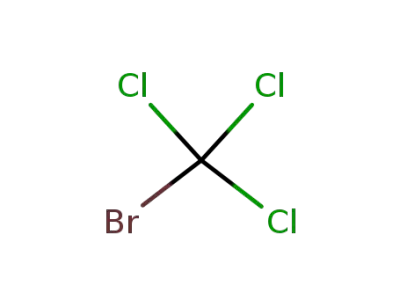
Bromotrichloromethane
-
185-94-4

bicyclo[2.1.0]pentane
137-43-9 Downstream products
-
30762-02-8
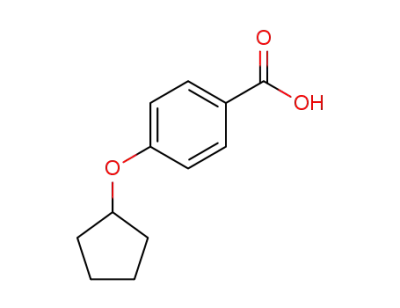
4-(cyclopentyloxy)benzoic acid
-
7133-21-3

cyclohexyl-cyclopentyl sulfide
-
4479-29-2

Hydroxy-cyclopentyl-diphenyl-methan
-
7133-14-4

cyclopentyl-propyl sulfide
Relevant Products
-
 1,5-Dibromopentane
CAS:111-24-0
-
 Cyclopentanemethanol
CAS:3637-61-4
-
 4,4'-Oxydiphthalic anhydride
CAS:1823-59-2
