

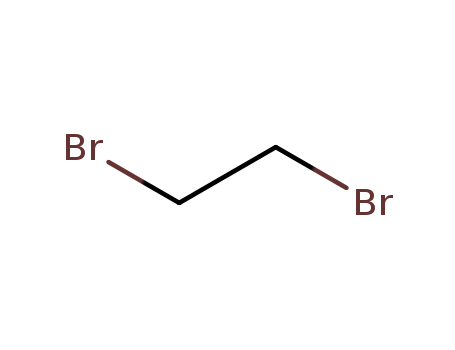
106-93-4
- Product Name:1,2-Dibromoethane
- Molecular Formula:C2H4Br2
- Purity:99%
- Molecular Weight:187.862
Product Details
pd_meltingpoint:9 °C
Appearance:Colorless to light yellow liquid
Purity:99%
Quality manufacturer supply 1,2-Dibromoethane 106-93-4 in stock with high standard
- Molecular Formula:C2H4Br2
- Molecular Weight:187.862
- Appearance/Colour:Colorless to light yellow liquid
- Vapor Pressure:11.7 mm Hg ( 25 °C)
- Melting Point:9 °C
- Refractive Index:n20/D 1.539(lit.)
- Boiling Point:130.2 °C at 760 mmHg
- Flash Point:12.6 °C
- PSA:0.00000
- Density:2.173 g/cm3
- LogP:1.77620
1,2-Dibromoethane(Cas 106-93-4) Usage
|
Preparation |
1,2-Dibromoethane is manufactured via uncatalyzed, liquid-phase bromination of ethylene. Gaseous ethylene is brought into contact with bromine by various methods, allowing for dissipation of the heat of the reaction. |
|
Air & Water Reactions |
Slightly soluble in water. May react slowly with moisture. |
|
Reactivity Profile |
1,2-Dibromoethane slowly decomposes in the presence of light and heat. Turns brown upon exposure to light. Corrosive to iron and other metals. May decompose upon contact with alkalis. Incompatible with oxidizing agents. Reacts with sodium, potassium, calcium, powdered aluminum, zinc, magnesium and liquid ammonia. May attack some plastics, rubber and coatings. May poison platinum catalysts [Hawley]. Reacts as an alkylating agent . |
|
Hazard |
Probable carcinogen. Toxic by inhalation, ingestion, and skin absorption; strong irritant to eyes and skin. |
|
Health Hazard |
Local inflammation, blisters and ulcers on skin; irritation in lungs and organic injury to liver and kidneys; may be absorbed through skin. |
|
Flammability and Explosibility |
Ethylene dibromide is a noncombustible substance (NFPA rating = 0). |
|
Trade name |
AADIBROOM?; EDB-85; FUMO-GAS?; ISCOBROME D?; KOPFUME?; NEFIS?; NEPHIS?; SOILFUME?; UNIFUME? |
|
Safety Profile |
Confirmed carcinogen with experimental carcinogenic, neoplastigenic, and teratogenic data. Human poison by ingestion. Experimental poison by ingestion, sktn contact, intraperitoneal, and possibly other routes. Moderately toxic by inhalation and rectal routes. Human systemic effects by ingestion: hypermothty, barrhea, nausea or vomiting, decreased urine volume or anuria. Experimental reproductive effects. Human mutation data reported. A severe skin and eye irritant. Implicated in worker sterdity. When heated to decomposition it emits toxic fumes of Br-. See also ETHYLENE DICHLORIDE and BROMIDES. |
|
Potential Exposure |
Ethylene dibromide is used as a chemical intermediate; as a fumigant for ground pest control; as a constituent of ethyl gasoline (anti-knock agent). It is also used in fire extinguishers, gauge fluids, and waterproofing preparations; and it is used as a solvent for celluloid, fats, oils, and waxes. Pesticide not in use; TRI and/or IUR indicates importers or manufacturers are unlikely |
|
Carcinogenicity |
1,2-Dibromoethane is reasonably anticipated to be a human carcinogen based on sufficient evidence of carcinogenicity from studies in experimental animals. Cancer Studies in Experimental Animals |
|
Metabolic pathway |
The bacterial strain GP1 can utilize 1,2-dibromoethane as a sole carbon and energy source. The first step in 1,2-dibromoethane is catalyzed by a hydrolytic haloalkane dehalogenase and the resulting 2- bromoethanol is rapidly converted to ethylene oxide, preventing the accumulation of 2-bromoethanol and 2- bromoacetaldehyde. However, the further metabolic pathway(s) is unclear. |
|
storage |
work with EDB should be conducted in a fume hood to prevent exposure by inhalation, and appropriate impermeable gloves and safety goggles should be worn to prevent skin contact. Gloves and protective clothing should be changed immediately if EDB contamination occurs. Since EDB can penetrate neoprene and other plastics, protective apparel made of these materials does not provide adequate protection from contact with EDB. |
|
Shipping |
UN1605/154 Ethylene dibromide, Hazard Class: 6.1; Labels: 6.1-Poison Inhalation Hazard, Inhalation Hazard Zone B |
|
Purification Methods |
Wash the dibromide with conc HCl or H2SO4, then water, aqueous NaHCO3 or Na2CO3, more water, and dry it with CaCl2. Fractionally distil it. Alternatively, keep in daylight with excess bromine for 2hours, then extract with aqueous Na2SO3, wash with water, dry with CaCl2, filter and distil. It can also be purified by fractional crystallisation by partial freezing. Store it in the dark. [Beilstein 1 H 90, 1 I 28, 1 II 61, 1 III 182, 1 IV 158.] |
|
Incompatibilities |
Reacts vigorously with chemically active metals; liquid ammonia, strong bases; strong oxidizers; causing fire and explosion hazard. Light, heat, and moisture can cause slow decomposition, forming hydrogen bromide. Attacks fats, rubber, some plastics and coatings. |
|
Waste Disposal |
Controlled incineration with adequate scrubbing and ash disposal facilities |
|
Physical properties |
Colorless liquid with a sweet, chloroform-like odor. Odor threshold concentration is 25 ppb (quoted, Keith and Walters, 1992). |
|
Definition |
ChEBI: 1,2-dibromoethane is a bromoalkane that is ethane carrying bromo substituents at positions 1 and 2. It is produced by marine algae. It has a role as a fumigant, a carcinogenic agent, a marine metabolite, an algal metabolite, a mouse metabolite and a mutagen. It is a bromohydrocarbon and a bromoalkane. |
|
General Description |
1,2-dibromomethane is a heavy, colourless liquid with a mild sweet odour, like chloroform. Ethylene dibromide is incompatible with strong oxidisers, magnesium, alkali metals, and liquid ammonia. Ethylene dibromide is soluble in alcohols, ethers, acetone, benzene, and most organic solvents and slightly soluble in water. It reacts with lead residues to generate volatile lead bromides. Because of limitations in epidemiological study evidences for ethylene dibromide as a human carcinogen is inconclusive. In 1984, the U.S. EPA imposed a ban on its use as a soil and grain fumigant. |
|
Agricultural Uses |
Fumigant, Nematicide: Not approved for use in EU countries. Not registered for use in the U.S. Persons whose clothing or skin is contaminated with liquid ethylene dibromide (above 10°C) can secondarily contaminate others by direct contact or through off-gassing vapor. Ethylene dibromide was used extensively as a pesticide and an ingredient of soil, vegetable, fruit, and grain fumigant formulations. Still used in India, South Africa and other countries. There are 15 global suppliers. |
InChI:InChI=1/C2H4Br2/c3-1-2-4/h1-2H2
106-93-4 Relevant articles
Absolute Rate Constants for Bromine Abstraction from N-Bromoimides and Br2 by Alkyl Radicals
Tanko, James M.,Skell, Philip S.,Seshadri, Sri
, p. 3221 - 3225 (1988)
Imidyl radicals react with cyclopropanes...
Facile Preparation of Λ-Shaped Building Blocks: Hünlich Base Derivatization
Kazem-Rostami, Masoud
, p. 1641 - 1645 (2017)
Hünlich's base modification has resulted...
Ionic Bromination of Ethane and Other Alkanes (Cycloalkanes) with Bromine Catalyzed by the Polyhalomethane*2AlBr3 Aprotic Organic Superacids under Mild Conditions
Akhrem, Irena S.,Orlinkov, Alexander V.,Afanas'eva, Lyudmila V.,Mysov, Evgenii I.,Vol'pin, Mark E.
, p. 9365 - 9368 (1995)
The polyhalomethane*2AlBr3 aprotic organ...
Direct and Regioselective Transformation of α-Chloro Carbonyl Compounds into Alkenes and Deuterioalkenes
Barluenga, Jose,Yus, Miguel,Concellon, Jose M.,Bernad, Pablo
, p. 2721 - 2726 (1981)
The successive treatment ethyl chloroace...
Photolysis of 3-Bromo-3-methyldiazirine
Crespo, Maria T.,Figuera, Juan M.,Rodriguez, Juan C.,Utrilla, Roberto Martinez
, p. 5790 - 5796 (1984)
The photolysis at 354 nm of 3-bromo-3-me...
Halogenobis(N,N-dialkyldithiocarbamato)iron(III) Complexes as Potential Catalysts for Halogen Addition Reactions to Alkenes
Tsipis, Constantinos A.,Katsoulos, George A.,Vakoulis, Fotios D.
, p. 1404 - 1405 (1985)
In the presence of a catalytic amount of...
-
Dubois et al.
, p. 2993 (1975)
-
Reactivity of Alkaneselenyl Bromide: Conversion of Alcohols into the Corresponding Alkyl Bromides with Dialkylselenium Dibromide
Akabori, Sadatoshi,Takanohashi, Yoshinori
, p. 3482 - 3484 (1991)
The reaction of alcohols with dialkylsel...
Functionalization of saturated hydrocarbons by aprotic superacids 4. Ionic bromination of ethane and other alkanes and cycloalkanes with molecular bromine in the presence of systems based on polyhalomethanes and AlBr3 under mild conditions
Akhrem,Orlinkov,Afanas'eva,Vol'pin
, p. 1148 - 1153 (1996)
Aprotic organic superacids CBr4 · 2AlBr3...
-
Voronkov,M.G. et al.
, (1978)
-
Oxidative bromination of alkenes mediated with nitrite in ionic liquids
Kuznetsova, Lidia I.,Kuznetsova, Nina I.,Zudin, Vladimir N.,Utkin, Viktor A.,Trebushat, Dmitry V.,Fedotov, Martin A.,Larina, Tatyana V.
, p. 1499 - 1506,8 (2014)
The oxidative bromination of C2-C8 alken...
1,2-Dibromotetrachloroethane: An efficient reagent for many transformations by modified Appel reaction
Essiz, Sel?uk,Da?tan, Arif
, p. 150 - 156 (2019/05/16)
An efficient and facile method has been ...
Formation of acridones by ethylene extrusion in the reaction of arynes with β-lactams and dihydroquinolinones
Fang, Yuesi,Rogness, Donald C.,Larock, Richard C.,Shi, Feng
scheme or table, p. 6262 - 6270 (2012/09/22)
N-Unsubstituted β-lactams react with a m...
106-93-4 Process route
-
-
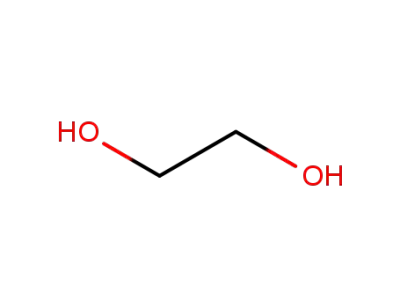
107-21-1
ethylene glycol

-

-
106-93-4
ethylene dibromide

-
-
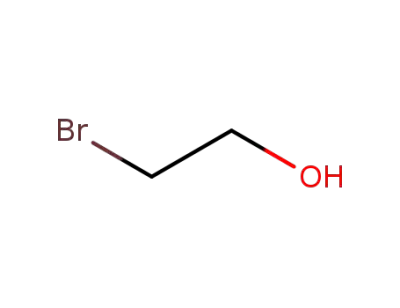
540-51-2
2-bromoethanol
| Conditions | Yield |
|---|---|
|
With
1,2-dibromo-1,1,2,2-tetrachloroethane; triphenylphosphine;
In
dichloromethane;
at 20 ℃;
for 0.15h;
|
45% 50% |
-

-
74-85-1
ethene
-
-
106-93-4
ethylene dibromide
-
-
540-51-2
2-bromoethanol
| Conditions | Yield |
|---|---|
|
With
hydrogen bromide; oxygen; sodium nitrite;
at 40 ℃;
for 0.716667h;
Ionic liquid;
|
0.92 mmol 0.23 mmol |
106-93-4 Upstream products
-
74-96-4
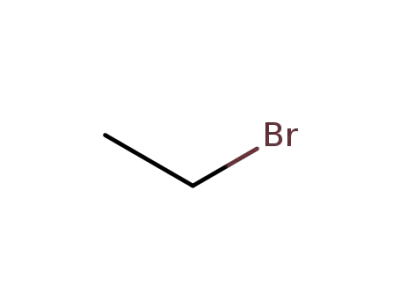
ethyl bromide
-
593-60-2
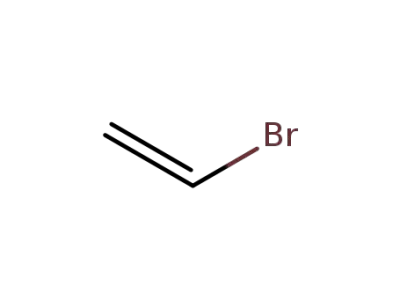
Vinyl bromide
-
557-91-5
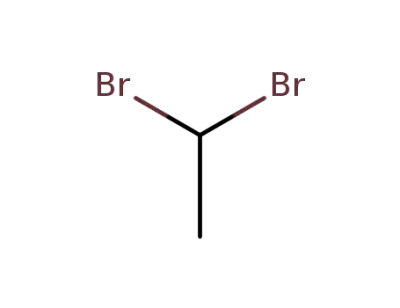
1,1-Dibromoethane
-
506-96-7
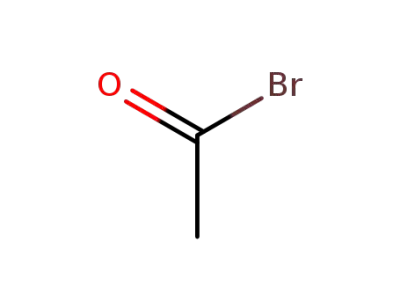
Acetyl bromide
106-93-4 Downstream products
-
30098-65-8

5,8-diazoniadispiro[4.2.4.2]tetradecane dibromide
-
1932-04-3

1,2-dipiperidinoethane
-
1723-94-0

1,2-dimorpholylethane
-
6268-76-4

4-(2-bromo-ethyl)-4-methyl-morpholinium; bromide
Relevant Products
-
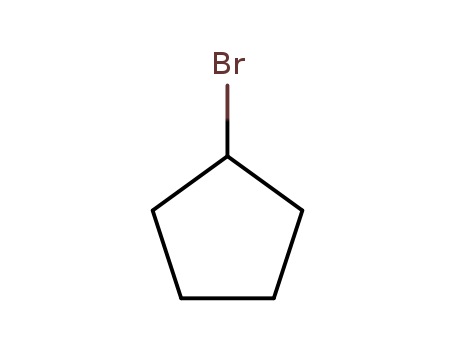 Cyclopentyl bromide
CAS:137-43-9
-
 2-(Phenyliodonio)benzoate hydrate (1:1)
CAS:96195-89-0
-
 Bromoacetyl bromide
CAS:598-21-0
