

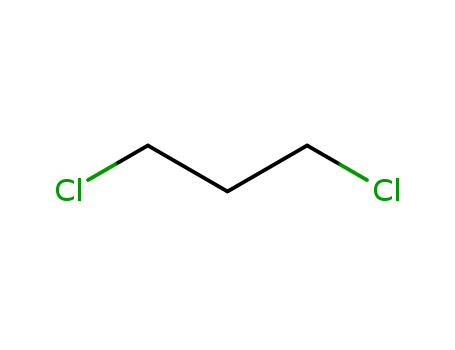
142-28-9
- Product Name:1,3-Dichloropropane
- Molecular Formula:C3H6Cl2
- Purity:99%
- Molecular Weight:112.987
Product Details
pd_meltingpoint:-99 ºC
Appearance:clear colourless liquid
Purity:99%
China cas 142-28-9 manufacturer wholesale 1,3-Dichloropropane at affordable price
- Molecular Formula:C3H6Cl2
- Molecular Weight:112.987
- Appearance/Colour:clear colourless liquid
- Vapor Pressure:18.3mmHg at 25°C
- Melting Point:-99 ºC
- Refractive Index:n20/D 1.448(lit.)
- Boiling Point:120.4 °C at 760 mmHg
- Flash Point:32.2 °C
- PSA:0.00000
- Density:1.188 g/cm3
- LogP:1.85410
1,3-Dichloropropane(Cas 142-28-9) Usage
|
Preparation |
1,3-Dichloropropane is obtained by the action of propylene glycol with hydrochloric acid.1,3-Dichloropropane synthesis: A process for the preparation of 1,3-dichloropropane by reacting bis(3-hydroxypropyl)ether with hydrogen chloride, optionally in the presence of tertiary basic nitrogen compounds or other tertiary aliphatic bases as catalysts, distilling off the 1,3-dichloropropane and the water of reaction and working up the two phases. Process for the preparation of 1,3-dichloropropane |
|
Synthesis Reference(s) |
The Journal of Organic Chemistry, 29, p. 194, 1964 DOI: 10.1021/jo01024a045 |
|
Air & Water Reactions |
Highly flammable. |
|
Reactivity Profile |
Halogenated aliphatic compounds, such as 1,3-Dichloropropane, are moderately or very reactive. Reactivity generally decreases with increased degree of substitution of halogen for hydrogen atoms. Low molecular weight haloalkanes are highly flammable and can react with some metals to form dangerous products. Materials in this group are incompatible with strong oxidizing and reducing agents. Also, they are incompatible with many amines, nitrides, azo/diazo compounds, alkali metals, and epoxides. |
|
Health Hazard |
INHALATION: May cause some central nervous system depression. EYES: May cause some pain and irritation. SKIN: Mild irritation. |
|
Safety Profile |
Moderately toxic by ingestion. Mutation data reported. A very dangerous fire hazard when exposed to heat or flame. When heated to decomposition it emits highly toxic fumes of Cl and phosgene. See also CHLORINATED HYDROCARBONS, ALIPHATIC; and PROPYLENE DICHLORIDE. |
|
Definition |
ChEBI: 1,3-dichloropropane is a chloroalkane that is propane in which a hydrogen from each of the terminal methyl groups has been replaced by a chlorine. It has a role as an environmental contaminant and a nematicide. It is a chloroalkane and a chlorohydrocarbon. |
|
General Description |
1,3-dichloropropane is a colorless watery liquid with a sweet odor. Sinks in?water. Produces irritating vapor. (USCG, 1999) |
InChI:InChI=1/C3H6Cl2/c4-2-1-3-5/h1-3H2
142-28-9 Relevant articles
-
Krenzel' et al.
, (1959)
-
KINETICS AND MECHANISM OF THE REDUCTION OF POLYCHLOROALKANES BY THREITHYLSILANE, CATALYZED BY BINUCLEAR MANGANESE AND RHENIUM CARBONYLS
Il'inskaya, L. V.,Kuz'mina, N. A.,Gasanov, R. G.,Chukovskaya, E. Ts.
, p. 2087 - 2090 (1987)
-
Laser-Initiated Chain Reactions of Chlorine with Propane and Cyclopropane in Amorphous Films at 77 K
Sedlacek, Arthur J.,Mansueto, Edward S.,Wight, Charles A.
, p. 6223 - 6229 (1987)
Free radical reactions of chlorine with ...
Conformational Selectivity in the Solid-State Photochlorination of Cyclopropane
Tague, Thomas J.,Wight, Charles A.
, p. 3266 - 3269 (1993)
The solid-state free-radical chain react...
-
Levaillant
, (1936)
-
Solvent pressure effects in free radical reactions. 2. Reconciliation of the gas and condensed phase chlorination of cyclopropane
Tanko, James M.,Suleman, N. Kamrudin
, p. 5162 - 5166 (1994)
The results reported herein demonstrate ...
-
Morgan,Burstall
, p. 1497,1500 (1930)
-
-
Mayo
, p. 5392,5394 (1954)
-
Preparation method of dichloroalkane
-
Paragraph 0019, (2021/02/10)
The invention discloses a preparation me...
Method and system for producing 1, 3-propylene glycol from 1, 3-dichloropropanol
-
Paragraph 0083; 0086-0087; 0090; 0093-0094; 0097; 0100-0101, (2021/03/13)
The invention discloses a method and a s...
Continuous method for preparation of dihalogenated alkane from diol compound
-
Paragraph 0044-0050, (2020/03/16)
The invention discloses a continuous met...
Hydrodehalogenation of alkyl halides catalyzed by a trichloroniobium complex with a redox active α-diimine ligand
Nishiyama, Haruka,Hosoya, Hiromu,Parker, Bernard F.,Arnold, John,Tsurugi, Hayato,Mashima, Kazushi
supporting information, p. 7247 - 7250 (2019/07/02)
A high-valent d0 niobium(v) complex, (α-...
142-28-9 Process route
-

-
108-60-1,52438-91-2
bis(1-chloro-2-propyl) ether

-

-
616-23-9
2,3-Dichloro-1-propanol

-

-
142-28-9
1,3-Dichloropropane
-
-
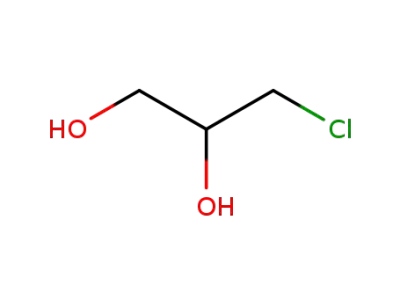
96-24-2
3-monochloro-1,2-propanediol
| Conditions | Yield |
|---|---|
|
With
hydrogen;
at 250 ℃;
|
-
-
108-60-1,52438-91-2
bis(1-chloro-2-propyl) ether
-
-
616-23-9
2,3-Dichloro-1-propanol
-
-
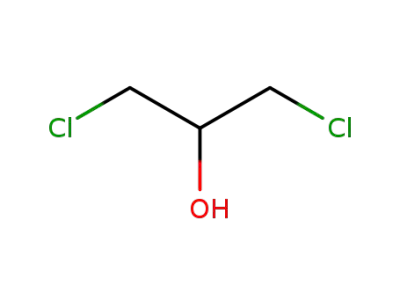
96-23-1
1,3-Dichloro-2-propanol
-
-
142-28-9
1,3-Dichloropropane
-
-
96-24-2
3-monochloro-1,2-propanediol
| Conditions | Yield |
|---|---|
|
With
hydrogen;
at 200 ℃;
Reagent/catalyst;
Temperature;
|
142-28-9 Upstream products
-
503-30-0

trimethylene oxide
-
632-02-0

3-chloropropyl p-toluenesulfonate
-
60-29-7

diethyl ether
-
50-00-0

formaldehyd
142-28-9 Downstream products
-
100620-48-2

1-tert-butyl-4-(3-chloropropoxy)benzene
-
102756-13-8

1,3-bis-(4-tert-butyl-phenoxy)-propane
-
2117-07-9

hexa-Si-phenyl-Si,Si'-propanediyl-bis-silane
-
2591-14-2

2-[(3-chloropropyl)sulfanyl]-1,3-benzothiazole
Relevant Products
-
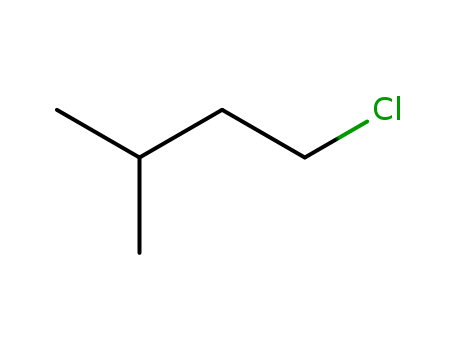 1-Chloro-3-methylbutane
CAS:107-84-6
-
 3,6-Bis(tert-Butyl)Carbazole
CAS:37500-95-1
-
 1-Bromo-3-chloropropane
CAS:109-70-6
